


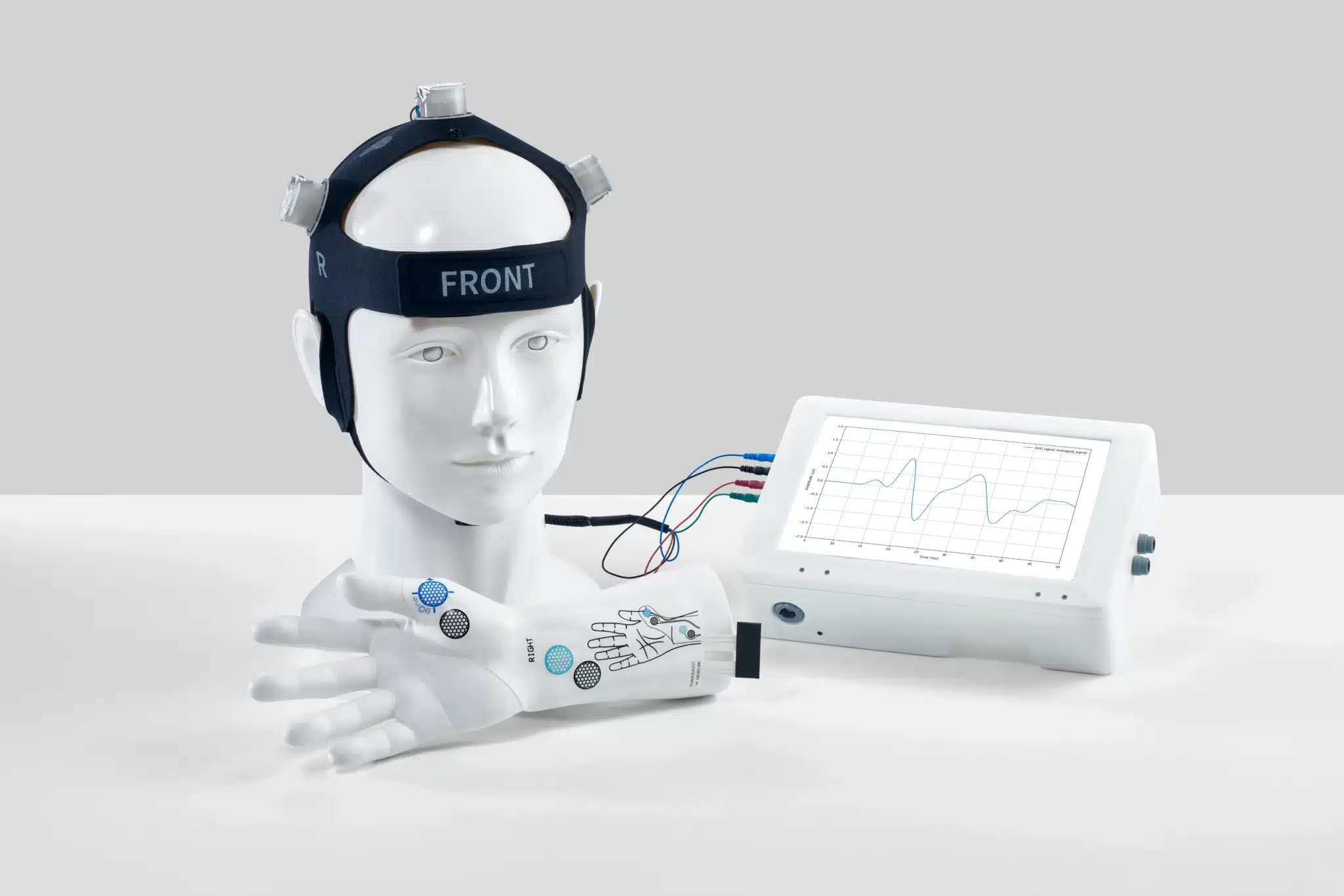
Time Is Brain is developing Brain20, a system that supports neurological assessment in stroke patients by combining peripheral stimulation with monitoring of the resulting brain activity. Quad Industries worked on the patient-contact electrode component. It is a printed structure with Ag/AgCl (silver/silver chloride) materials, a hydrogel interface to the skin, and the interconnections that link the electrodes to the system. Quad Industries turned the early-stage design into a robust, manufacturable component suitable for pilot production, clinical evaluation and future volume manufacturing.
An electrode built to cover the whole stroke patient journey
Brain20 is intended for use across different stages, covering the stroke patient journey. In stroke care, every minute counts: the sooner clinicians can assess a patient’s neurological condition, the sooner they can decide on the right treatment.
In every one of those settings, the quality of the measurement starts at the skin. According to Time Is Brain, excellent electrode performance is essential to the reliability of the technology and to its ultimate goal of helping improve patient outcomes.
The component has to do several things at once. The printed circuit carries the signal. The hydrogel provides the electrical interface with the patient’s skin. The printed interconnections carry the signal to the connector and the rest of the system. A weakness in any of these layers shows up as an unreliable reading.
The weak spot between flexible printed layers and a rigid connector
One of the main engineering challenges was to make the electrode and its interconnections mechanically robust without compromising electrical performance.
The transition from flexible electrode materials to rigid connector components needed the most attention. A flexible printed circuit can bend, but a connector cannot. The point where they meet therefore takes the strain from every time the electrode is handled and connected. That interface has to withstand handling and connection without damaging the printed structure or losing electrical contact.
A second requirement applied to the design as a whole. The electrode could not just work as a single good prototype. It had to be manufacturable repeatedly and reliably, with production yield and scalability taken into account from the development stage. And because Time Is Brain was at a commercial stage, requirements and timelines kept evolving while this work was underway.
Clinical concept on one side, printed electronics on the other
The roles were clearly divided. Time Is Brain brought the clinical application and the system concept. Quad Industries contributed the materials, printed electronics and manufacturing expertise needed to translate the electrode design into a component suitable for further validation and industrialization.
Printed electronics fit the design because the printed structure covers both the Ag/AgCl electrode areas and the interconnections. The materials, print layout and manufacturing process could therefore be optimized together rather than as separate parts. The two companies had known each other for several years. Time Is Brain chose Quad Industries for its combination of manufacturing capabilities and a collaborative approach that suited its stage of development.

Iterating on medically validated materials from the first prototype
Development ran through several cycles of prototype manufacturing, engineering review and design refinement. Quad Industries made the prototypes with medically validated materials and processes, not lab-only alternatives. That made it possible to assess manufacturability early and reduced the number of changes needed later on the way to serial production.
Alongside the engineering work, the project schedule needed flexibility. Time Is Brain describes the Quad Industries team as responsive and available, and willing to adapt to its timing as requirements evolved.
Each cycle focused on four concrete points:
Step 1: Design and risk review
Each cycle started with a review of the electrode and interconnection design to identify mechanical and electrical risks.
Step 2: Prototype manufacturing
Prototypes were manufactured using printed electronics processes and medically validated materials, so each design change was tested on the same process route that serial production will use.
Step 3: Connector interface redesign
The connector interface was redesigned to improve mechanical stability and robustness. These changes addressed the main mechanical risk: the transition from flexible printed layers to the rigid connector.
Step 4: Process optimization
The printed features and manufacturing approach were optimized to improve consistency and reduce potential sources of production variation. Fewer sources of variation in the print and assembly steps mean that the electrode validated at prototype stage is the electrode that comes off the line at volume.
Prototype electrodes that meet Brain20’s performance requirements
The project is now in the transition from prototype to production. The results so far:
- The prototype electrode components met Time Is Brain’s performance requirements, and the company rates their performance as good.
- The connector interface is more mechanically robust, following the design changes Quad Industries proposed.
- The component is suitable for pilot production and clinical evaluation, with production yield and scale-up taken into account from the development stage.
- Serial production using final manufacturing tooling is being prepared at Quad Industries’ facility in Slovakia.
Time Is Brain says it is too early to quantify the business impact. The components made with final tooling will be evaluated once they have been delivered. Based on its experience to date, Time Is Brain says it would recommend Quad Industries to companies looking for a supportive manufacturing partner during development.
Read more about how Quad Industries designs wearable adhesive electrodes and electrodes for ExG monitoring, or explore our printed electronics manufacturing capabilities.
Developing electrodes for neurological or emergency care?
If your device depends on a reliable skin interface and you want to know early whether your electrode design will hold up in production, our team can review it with you. Tell us about your project and we will look at materials, connector design and scale-up together.
